LAIKA’s Wildwood exhibition reveals the hands and designs behind movement, from a single puppet to a forest scene.
Article
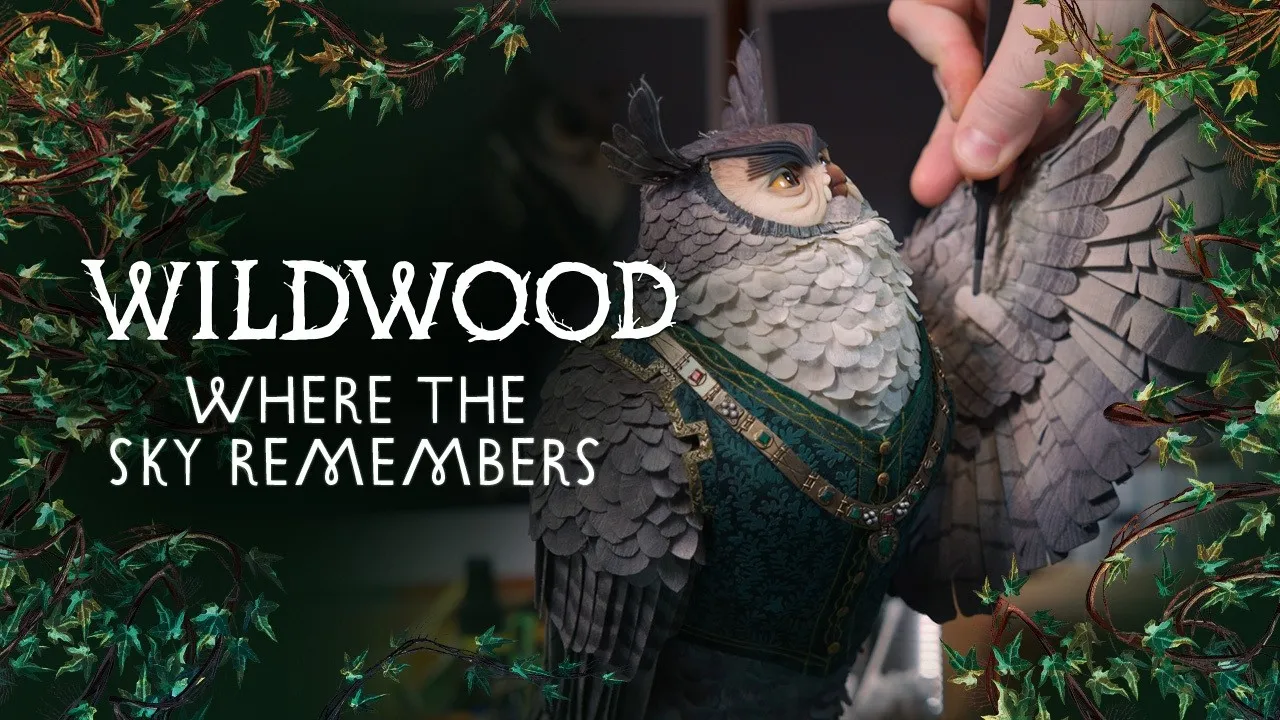
When the bird on the screen spreads its wings, the forest suddenly grows larger. It is easy to accept the scene as something animation makes possible. LAIKA’s production video reveals another scene beyond the frame: physical sets and puppets, with people adjusting each movement in small increments.
Stop-motion studio LAIKA, which created “Coraline” and “Kubo and the Two Strings,” has now moved the production process of “Wildwood” to the exhibition hall. The exhibition opens at the London Design Museum on October 15 and runs until January 10, 2027. It shows the many layers of a movie, from sketches of the story to characters and costumes, puppets and miniature sets, and filming.
Create the next moment from a stationary object
Stop motion is a method of moving an object a little to take a picture, then moving it a little again to take the next picture. When played back, the puppet appears to move on its own. However, the impression of movement is not determined only by the number of photos. The moment a person turns their head, how much they hesitate, and where they place their feet create a character's personality.
In this case, the puppet is not only a beautifully made sculpture, but also a filming tool that must be moved repeatedly. The structure of the body must maintain posture, and the clothing must accommodate that movement. Even small sets should be read as part of the same world as the characters when captured on camera. Puppets, clothes, buildings, and light do not complete a scene separately.
Technology next to hand work
Describing LAIKA's work solely as handicrafts leaves out an important part. This exhibition covers both the process of rapid prototyping and puppet production, and the studio also received a Scientific and Technical Award from the Academy of Motion Picture Arts and Sciences in 2016 for its innovations using 3D printing.
Technology is not only used to erase traces left by hands. It is also used to embody the faces and movements that need to be expressed as actual objects and to make them capable of being handled repeatedly during filming. These production choices lie between the materials in the studio and the emotions on screen.
Before viewing the exhibition, the forest in the movie first catches your eye. Once you know the production process, even a puppet taking one step through the forest looks different. That step contains joints and clothing someone made, along with the patient work of setting up and photographing the next moment.
LAIKA production video
In the official video ‘Where the Sky Remembers’, you can see the process of the puppets and sets of 《Wildwood》 being transferred to the screen.
https://www.youtube.com/watch?v=q4dKRcVxjdc
official channel
https://www.youtube.com/@LAIKAStudios
Sources and editorial notes
Design Museum · Wildwood production exhibition
LAIKA Studios · Official production video
Editorial note: Facts were checked against the sources above; interpretations are MUADAILY’s editorial views. Image: LAIKA Studios · Official production video preview.
Machine-translated from Korean. Read the original.