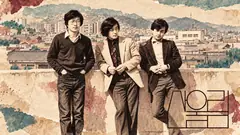
From “소녀” to “옛사랑,” follow the people and streets in Lee Moon Sae and Lee Young-hoon’s songs, then listen onward to “봄바람” and later work.
Article
The scenes that return with Lee Moon Sae’s songs
A song can make you stop what you are doing. A face sometimes comes to mind before the title does. Listen to several Lee Moon Sae songs and scenery arrives beside that face: a tree-lined road, an evening street, snow in Gwanghwamun. You might remember someone who walked there with you, or feel drawn to a street you have never visited.
Let us begin with “소녀” and continue to “옛사랑”: from wanting someone to stay beside you to keeping someone who has left in your memory. Rather than survey every album chronologically, we will follow the people and places inside the songs. Along the way comes a name long associated with Lee’s voice: composer Lee Young-hoon.12
Beside the singer was Lee Young-hoon
The third album, 난 아직 모르잖아요, in 1985; 사랑이 지나가면 in 1987; 가로수 그늘아래서면 in 1988. Reading the titles may be enough to recall their melodies. Beside songs long remembered under Lee Moon Sae’s name, it is worth placing another person’s name.1
Lee Young-hoon is essential to any discussion of “소녀,” “옛사랑” and “광화문 연가.” The authorised collaborative publication 작곡가 이영훈의 노래들, collecting his creative notes, traces the making of lyrics and melodies. It invites us to look beyond the performer to the person writing sentences and setting them to music.2
The more familiar a song becomes, the harder it can be to separate singer and songwriter. A title alone can summon a line in Lee Moon Sae’s voice. Still, listening while wondering who wrote the words may reveal a phrase we have always sung without noticing.
Lee Moon Sae also met listeners on the radio. His official career history records his tenure on Starry Night from 1985 to 1996. The singing voice and the speaking voice existed side by side. Some people first knew him through records, others as a radio host.1
“소녀”: asking someone to stay
“소녀” appeared on the third album in 1985. The officially distributed recording below comes from that album. Although the video displays a 2023 upload date, the song had been with listeners for decades before then.3
At first it may sound simply like an affectionate love song. Follow the wish for someone to stay, though, and a fear of their leaving also emerges. The more someone matters, the more reassurance we may want. A little of that impatience seems to mingle with the tenderness.
Knowing more love songs with age does not make this wish less recognisable. Finding it hard to ask someone to stay is not restricted to youth. A melody once sung for pleasure may now draw attention to the feelings behind the request.
Lee Moon Sae — 소녀From the third album, 1985 · Officially distributed audioA night of wanting to fly to someone
Describing Lee’s songs only through lonely streets and partings would leave out “깊은 밤을 날아서.” It sits beside “사랑이 지나가면” on his fourth album from 1987. A song about letting love go and one eager to reach a loved person share the same record.45
When we miss someone, the mind can arrive before the body. Long before a meeting, we are already imagining what to say. “깊은 밤을 날아서” takes that feeling further. Even a night of waiting can hold an excited song.
Placed after “소녀,” it changes the mood. Wanting to keep someone close becomes wanting to go and find them. One love song can make us pause while another quickens our steps. Such differences are part of the pleasure of listening to several together.
Lee Moon Sae — 깊은 밤을 날아서From the fourth album, 1987 · Officially distributed audioFrom tree-lined streets to Gwanghwamun
The fifth album, released in 1988, contains “가로수 그늘 아래 서면,” “광화문 연가” and “붉은 노을.” They may feel like hits encountered at different times, but they shared a record. Hearing the three together reveals some of that album’s range.6
“가로수 그늘 아래 서면” leaves room to place your own memories within its scenery. It need not be the same road: perhaps an alley walked together or a bus stop where you waited for someone. The song does not explain every event, leaving the listener space to remember.7
Here, try a 2018 concert video on Lee’s official channel. He is singing a song from his 1988 fifth album thirty years later. A recording remembered from long ago becomes an encounter with the singer at another point in his life.8
Lee Moon Sae — 가로수 그늘 아래 서면2018 LEE MOON SAE the BEST · Official concert video · Originally on the fifth album, 1988“광화문 연가” introduces names on a map. Deoksugung’s stone-wall road, Jeongdong-gil and Gwanghwamun are places one can visit. The song sets enduring scenery beside people who leave it. Unlike a city guide, it makes the person who shared the walk matter.9
Returning to a once-familiar street, you might first notice a shop that has changed and wonder where your old companion is now. The place names in “광화문 연가” invite that kind of thought. Someone who has never visited may one day pass through and remember the song first.
Lee Moon Sae — 광화문 연가From the fifth album, 1988 · Officially distributed audioNor should we forget “붉은 노을” from the same album. Someone is missed beneath that red sky too, but the song need not remain background music for a quiet walk. It can sound like wanting to call out to them. Lee’s musical landscapes contain not only the shade of trees but colour filling the sky.10
“옛사랑”: looking at a love not forgotten
“옛사랑” opens the seventh album, released in 1991, six years after “소녀.” Hearing them together creates a distance between asking a loved person to stay and living with a love that has passed. This is not a chronology of the singer’s relationships; it is a listening journey through different narrators.311
“옛사랑” can be heard as allowing daily life to continue without requiring longing to disappear. Claiming to have forgotten, trying to forget and living with a memory are different things. The song moves among them. It can accompany a day when you do not want to be told to put those feelings away.12
Perhaps once the first question was whether someone would return. Hearing the song later may make you pause elsewhere. There are people we no longer contact but still occasionally wonder about, and days we remember without asking to meet again. The recording is unchanged; the experiences we can bring to it have grown.
Of course, no such story is required to enjoy a song. Sometimes the voice or melody is enough. But if returning to a long-forgotten track unexpectedly brings a face to mind, we may listen a little longer that day.
Lee Moon Sae — 옛사랑From the seventh album, 1991 · Officially distributed audioA familiar voice in newer songs
Stopping here and treating Lee as only a singer of the past would leave later work unheard. His fifteenth album, NEW DIRECTION, released in 2015, includes “봄바람,” featuring Naul. Its seasonal title may recall the earlier songs, but this time another voice joins his. The official video names both singers.113
Even a favourite singer’s newer work can slip past us. Returning to the same songs gradually makes a playlist familiar. Adding “봄바람” offers a small detour into a meeting between a voice we know and another one.
Lee Moon Sae — 봄바람 (Feat. Naul)NEW DIRECTION, 2015 · Official music videoThe sixteenth album, BETWEEN US, followed in 2018. The agency’s official video list also includes “우리 사이.” Both titles look towards the space between people. Where an older song may recall a familiar relationship, this one offers a later chapter in the singer’s work.114
Lee Moon Sae — 우리 사이BETWEEN US, 2018 · Official music videoAlongside it is “이별에도 사랑이,” released in 2024 and introduced by the agency as an advance single for his seventeenth album. It is a long journey from “소녀.” As with hearing news from an old friend, there is time to listen to what the familiar voice has done since.115
Lee Moon Sae — 이별에도 사랑이Released in 2024 · Announced by his agency as an advance single for the seventeenth album · Official music videoOne more song on the way home
The scenery changes several times during this listening journey. Someone is wanted close by; then we fly through the night, stop under trees and encounter the streets of Gwanghwamun. The same singer does not always stay in the same place or move at the same pace.
No particular memory has to be produced to justify loving these songs. You need not have mailed a postcard to a radio show or walked through snow on Jeongdong-gil. You may meet the song first and place your own experiences beside it later. An old recording can become more than an object proving what its era was like.
If Lee Moon Sae’s music brings back someone you had forgotten, it is all right to think of them until the track ends. There need not be a call to make or old business to settle. Then, on the way home, play one less-familiar song as well, with that remembered face and welcome voice beside today’s walk.
Sources and reporting notes
- KMOONfnd · Official recording, concert and broadcasting history
- Younghoon Music / Samho ETM · Official book introduction, 작곡가 이영훈의 노래들
- Lee Moon Sae · Officially distributed audio, 소녀
- Bugs · Fourth-album information
- Lee Moon Sae · Officially distributed audio, 깊은 밤을 날아서
- Bugs · Fifth-album information
- Bugs · Track information, 가로수 그늘아래 서면
- Lee Moon Sae Official · 2018 THE BEST, 가로수 그늘 아래 서면
- Bugs · Track information, 광화문 연가
- Bugs · Track information, 붉은 노을
- Bugs · Seventh-album information, VII
- Bugs · Track information, 옛 사랑
- 1theK Official · 봄바람, featuring Naul
- 1theK Official · 우리 사이
- Lee Moon Sae Official · 이별에도 사랑이
- Lee Moon Sae · Officially distributed audio, 광화문 연가
- Lee Moon Sae · Officially distributed audio, 옛 사랑
The linked sources document the reporting. Personal recollections reflect the speakers’ memories, and comments on the music are editorial interpretation.
Machine-translated from Korean. Read the original.